 Reviews



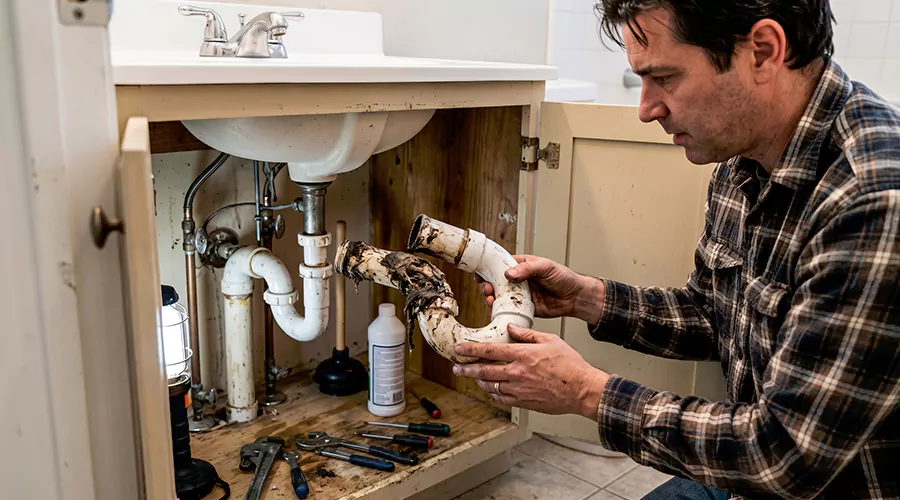
A clogged drain pipe usually contains accumulated waste or an obstruction that prevents wastewater from moving freely. Grease and hair are common causes of ordinary household clogs. A pipe that repeatedly blocks after cleaning may contain deeper deposits or have an underlying structural problem.
Typical professional drain cleaning costs $147 to $352 in the United States according to August 2026 pricing. Accessible drain pipe repairs can cost considerably more when the pipe itself needs work. The supplied keyword clogged drain pipe describes a specific plumbing condition rather than a general slow-draining fixture. Identifying which section of pipe is restricted is the most useful first step toward understanding why the problem occurred.
Why Does a Drain Pipe Become Clogged?
A drain pipe becomes clogged when material collects inside it faster than wastewater can carry that material away. The obstruction may develop near the fixture or farther into the branch line. Existing residue can make the problem worse by catching additional material during normal use.
Several conditions can contribute:
- Organic residue collecting inside the pipe.
- Grease attaching to the internal surface.
- Hair catching on existing buildup.
- Solid objects entering the drainage system.
- Deposits accumulating inside older piping.
- A physical defect interfering with normal wastewater movement.
- Tree-root intrusion in underground drainage lines.
A pipe restriction caused by accumulated material differs from a damaged pipe that repeatedly catches new debris. The correct diagnosis depends on separating these possibilities.
How Can You Tell Which Drainpipe Is Affected?
The number of affected fixtures provides a useful clue about the blockage's location. When only one sink drains slowly, the obstruction may sit close to that fixture. When several connected fixtures show similar symptoms, the restriction may be located after their drainpipes join.
Use this comparison when investigating the problem.
| Symptom | Possible Location | Useful Next Check |
|---|---|---|
| One bathroom sink drains slowly | Stopper or nearby pipe | Inspect the upper drain |
| One kitchen sink backs up | P-trap or branch pipe | Check accessible connections |
| Sink trap is clear but drainage remains slow | Wall-side drainpipe | Investigate farther downstream |
| Shower reacts when the toilet flushes | Shared waste piping | Stop repeated water testing |
| Multiple household drains back up | Main drainage line | Wider drainage investigation |
These patterns are diagnostic clues rather than proof of the obstruction's exact location.
For example, a completely clean sink trap does not establish whether the remaining blockage is caused by residue or pipe damage farther downstream.
Why Does the Drainpipe Keep Clogging After Cleaning?
Repeated clogging can occur when cleaning opens a passage through accumulated material without removing the entire obstruction. Water then begins moving normally for a short period. Remaining deposits continue catching debris until the available opening becomes restricted again.
This problem can be especially frustrating because the first clearing attempt may appear successful. However, a temporary improvement does not prove the drainpipe is completely open.
Recurring restrictions can also develop when:
- Grease remains attached to the pipe wall.
- Hair stays trapped farther downstream.
- A foreign object continues catching material.
- Existing deposits reduce the usable pipe diameter.
- A damaged section creates an internal obstruction.
- Pipe alignment allows solids to collect repeatedly.
The frequency and location of recurring symptoms can help determine whether the same obstruction is returning.
Can Incorrect Pipe Slope Contribute to a Clog?
A drainage pipe needs suitable alignment to carry wastewater toward the larger drainage system. A sagging section can hold standing water and allow solids to settle. This creates conditions where new material continues collecting even after an earlier blockage has been cleared.
- A low section is sometimes called a pipe belly.
- The problem is not always obvious from the fixture.
- A sink may drain normally immediately after clearing but become slow again after additional use.
Poor pipe alignment should be considered when the same section repeatedly blocks and accessible drain components remain clean. An investigation must distinguish pipe alignment from ordinary residue buildup.
Can Corrosion or Internal Deposits Restrict a Drainpipe?
Internal deposits can reduce the effective opening inside a drainage pipe. Older metal piping may also develop rough surfaces as it deteriorates. These conditions provide additional places where grease or other waste can collect.
- The result can be gradually worsening drainage.
- A restriction caused by internal deposits may return after a clearing attempt if substantial buildup remains along the pipe wall.
- Pipe material also affects how a repair can be approached.
- Current 2026 cost guidance identifies pipe material and accessibility as important factors in drainpipe replacement expenses.
How Does a Clogged Drainpipe Progress?
A clogged drainpipe can gradually lose drainage capacity as accumulated material reduces its usable opening. A partial restriction may allow normal operation under light water flow. More substantial buildup can eventually cause backups during ordinary fixture use.
| Problem Stage | Typical Symptoms | Possible Condition | 2026 U.S. Cost Reference |
|---|---|---|---|
| Early restriction | Occasional slow drainage | Initial buildup | Usually DIY |
| Partial blockage | Water pools during use | Accumulated residue | 147–352 for typical drain cleaning |
| Recurrent restriction | Problem returns after cleaning | Remaining deposits or pipe condition | Requires diagnosis |
| Accessible damaged pipe | Leak or repeated obstruction | Repairable pipe defect | 100–800 for minor repair |
| Severe hidden pipe problem | Widespread backup or difficult access | More extensive pipe damage | Can exceed $8,000 |
The repair figures reflect reported U.S. costs in 2026. Extensive work involving inaccessible piping or structural restoration can cost considerably more than ordinary cleaning.
What Warning Signs Suggest a Drain Pipe Problem?
A drainpipe problem becomes more likely when drainage remains poor after accessible components have been cleaned. Recurring symptoms at the same fixture can indicate material farther into the pipe. Problems affecting multiple fixtures shift attention toward shared drainage sections.
Watch for these warning signs:
- The drain becomes slow again shortly after cleaning.
- The P-trap is clean but water still backs up.
- A manual auger repeatedly encounters resistance farther inside the pipe.
- Water pools during normal fixture use.
- Several connected fixtures begin draining slowly.
- Gurgling occurs when another fixture operates.
- Wastewater returns through a lower drain.
- Unpleasant sewer-like odors accompany drainage problems.
- A previously cleared blockage returns without an obvious cause.
- Accessible drainage piping shows corrosion or damage.
The strongest warning is a combination of recurring blockage and symptoms extending beyond the original fixture.
How Can You Diagnose a Clogged Drainpipe?
A staged drainage inspection can narrow the possible obstruction location without requiring immediate pipe replacement. Begin with the affected fixture and inspect accessible components. Continued poor drainage after those components are clean suggests that the restriction may lie farther downstream.
Use this diagnostic sequence:
- Identify which fixture is affected.
- Check whether other connected fixtures drain normally.
- Remove visible debris from the affected opening.
- Test drainage with a small amount of water.
- Inspect an accessible P-trap when appropriate.
- Check whether the pipe entering the wall appears restricted.
- Stop testing when wastewater begins backing up elsewhere.
Avoid forcing a drain snake into piping that appears damaged. Lowe's advises against household snaking when pipes are suspected to be corroded or structurally compromised.
Can a Drainpipe Be Clogged Without Being Completely Blocked?
Yes. A drainpipe can contain a partial obstruction while still allowing some wastewater through. The remaining opening may be large enough for light flow but too small to handle a full basin or normal shower use. This explains why some drains appear functional until a larger amount of water enters. For example, a kitchen sink may drain during brief handwashing but back up when the dishwasher discharges water into the shared line. A partial obstruction should not be ignored merely because the pipe is still passing some water. Normal drainage requires sufficient capacity for the fixture's ordinary flow.
How Can You Tell if Cleaning Will Be Enough?
Mechanical cleaning can address many obstructions caused by accumulated debris. However, a pipe defect may continue catching material even after the blockage has been removed. The distinction becomes clearer when a drain repeatedly fails despite appropriate clearing.
Factors worth investigating include:
- Whether physical debris is removed during cleaning.
- Whether drainage returns to its previous normal speed.
- How long the improvement lasts.
- Whether the same obstruction returns.
- Whether several fixtures share the problem.
- Whether the pipe shows visible signs of damage.
A single successful clearing attempt cannot prove that every section of hidden pipe is in good condition. Recurring problems deserve more careful investigation than an isolated clog.
When Should You Call a Professional?
Professional diagnosis becomes appropriate when a drainpipe repeatedly clogs after correct mechanical clearing or several fixtures develop symptoms together. Suspected structural damage also requires closer investigation because ordinary cleaning may not correct the underlying problem. Main sewer line clog repair averages $380 in the United States in 2026. Minor accessible drainpipe repairs commonly cost $100 to $800.
Professional evaluation is appropriate when:
- Repeated cleaning does not produce lasting improvement.
- A manual auger cannot reach or move the obstruction.
- Multiple connected fixtures back up.
- A drainpipe visibly leaks or appears damaged.
- Pipe alignment problems are suspected.
- Tree roots may have entered an underground sewer line.
- Wastewater returns into the home.
A professional may use a drain camera when the obstruction's location or the pipe's condition cannot be determined from accessible plumbing. Video inspection can reveal structural problems that ordinary drain cleaning cannot identify.
How Can You Prevent Another Drainpipe Clog?
Preventing recurring drainpipe problems requires keeping unsuitable materials out of the system and addressing existing restrictions. Regular surface maintenance reduces ordinary buildup. However, habits alone cannot correct damaged or incorrectly aligned piping.
Useful preventive steps include:
- Keep cooking grease out of kitchen sinks.
- Remove hair before it enters bathroom drains.
- Use appropriate strainers.
- Avoid flushing wipes and other unsuitable materials.
- Inspect accessible plumbing when drainage changes.
- Respond to recurring blockages instead of repeatedly using chemicals.
- Address confirmed structural pipe problems.
The EPA recommends keeping unsuitable household waste out of drainage systems because it can contribute to clogs and treatment-system problems.
Conclusion
A clogged drain pipe usually contains accumulated material that restricts wastewater movement. Repeated blockages can also indicate a condition affecting the pipe itself. Check which fixtures are affected and inspect accessible components before using deeper mechanical tools. Persistent symptoms or suspected structural damage may require professional investigation. A lasting repair depends on identifying the cause rather than repeatedly opening a temporary passage. This week, monitor the affected fixture's drainage speed.
Frequently Asked Questions
Why is my drainpipe clogged even though the trap is clean?
The obstruction may sit farther downstream inside the branch drain or shared drainage piping.
Can a drainpipe become clogged because of poor alignment?
Yes. Certain alignment problems can allow water and solids to collect inside the pipe.
Can an auger fix every clogged drainpipe?
No. An auger can clear many physical obstructions but cannot correct structural pipe damage.
Why does my drainpipe clog again after snaking?
Some material may remain inside the pipe. An underlying pipe condition can also contribute to repeated buildup.
When is drainpipe replacement necessary?
Replacement may become necessary when the pipe is structurally damaged or cannot function properly after the underlying problem has been diagnosed.